FIVE-STAR TEAM WARRANTY &
SAME-DAY SERVICE

Why Is My Water Pressure Suddenly Low in San Jose, CA?
If you turned on your shower this morning and got a weak trickle instead of normal flow, you’re not imagining it and you’re not alone. Sudden low water pressure is one of the most common calls we get from homeowners across San Jose, Willow Glen, Almaden Valley, and Cupertino. The fix ranges from a free 5-minute adjustment to a full plumber repair.
After 15+ years working on residential plumbing in Santa Clara County, I know that sudden pressure drops almost always mean something specific has changed. Ignoring it usually makes it worse. Here’s exactly what to look for.
What Is Considered Low Water Pressure?
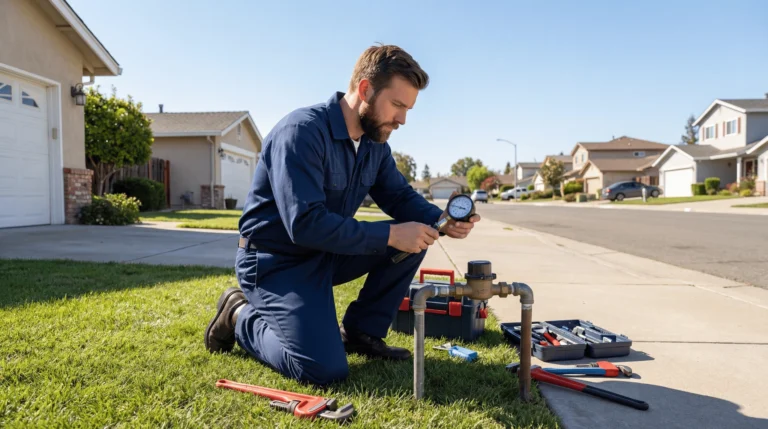
Normal residential water pressure runs between 40 and 80 PSI. Anything below 40 PSI feels noticeably weak at the faucet, shower, or hose. Plumbers use pressure gauges at multiple points to find exactly where the water pressure issues start. A sudden drop is a different problem than pressure that’s been gradually weak for months and it points to a more specific cause.
What Are the Common Causes of Low Water Pressure?
Most water pressure problems in San Jose CA come down to a handful of common issues. Licensed plumbers see these repeatedly in older homes across Santa Clara County.
A Faulty Pressure Regulator
A faulty pressure regulator also called a water pressure regulator or PRV is one of the most frequent culprits. These devices last 10–15 years. When they fail, pressure fluctuations happen throughout the day instead of consistent flow. This is especially common in San Jose homes built in the 1980s–2000s.
Partially Closed Valves
Partially closed valves are a plumbing issue homeowners often overlook. Even a valve that’s 90% open causes reduced water pressure across multiple plumbing fixtures sinks, showers, and appliances using both hot and cold water. Check your main shut-off valve near the water meter first. Someone may have bumped it or left it partially closed after a repair.
Small Leaks Inside Walls or Under the Slab
Small leaks inside walls or under slabs restrict water flow long before they become visible. A hidden leak is a serious possibility if your pressure dropped suddenly and you haven’t touched anything. This is especially true in older homes with galvanized or copper supply lines throughout the South Bay.
Corroded or Scaled Pipes
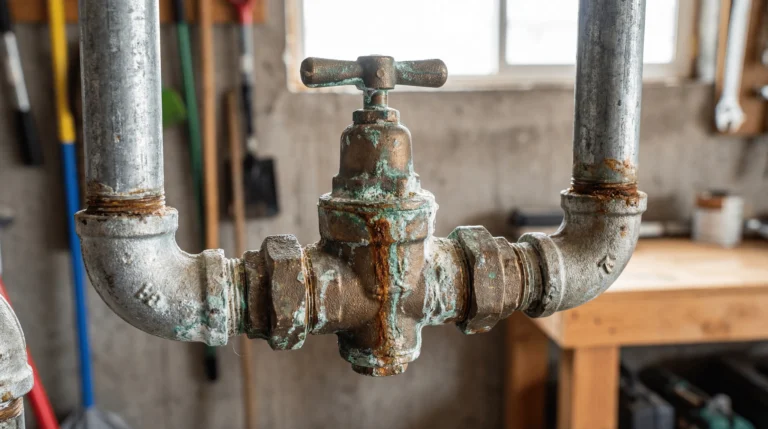
San Jose homes built before 1970 often still have original galvanized steel pipes. Corrosion and mineral scale build up over time and hit a tipping point that causes what feels like a sudden drop. Santa Clara County water has moderate hardness that speeds this process up. Many homeowners choose to install a water softener alongside any pressure repair to stop the problem from coming back.
Municipal Supply Issues
San Jose Water and San Jose Municipal Water serve different parts of the city. A main break, high demand, or scheduled maintenance on their end drops your pressure and nothing is wrong with your home’s plumbing. Always check their outage map before calling a plumber.
Clogged Aerators or Showerheads
Low water pressure at only one fixture almost never means a main line problem. A clogged aerator screen or mineral-caked showerhead is usually the culprit. This takes 10 minutes to fix yourself.
Water Heater Problems
Reduced water pressure only on the hot water side points to your water heater. A partially closed isolation valve, a failing inlet, or heavy sediment buildup can all restrict flow through the unit.
How to Tell Where the Problem Is
Before calling a plumber, narrow it down yourself:
One fixture or all plumbing fixtures? → One fixture = aerator, showerhead, or that fixture’s valve → All fixtures = main line, faulty pressure regulator, or municipal issue
Only hot or both hot and cold water? → Only hot = water heater related → Both = main supply issue
Did it happen after recent work? → Plumbing work or city work nearby can cause temporary drops
Do you hear running water with everything off? → Small leaks are likely — call a plumber today
Can You Fix Low Water Pressure Yourself?
Some common causes of low water pressure are simple DIY fixes. Others need a licensed plumber.
Handle these yourself:
- Open the main shut-off valve fully — partially closed valves are the easiest free fix
- Clean or replace a clogged aerator ($3–$8 at any hardware store)
- Swap out a mineral-clogged showerhead
- Check San Jose Water’s website for reported outages
Call a plumber for these:
- Water pressure regulator replacement — proper sizing matters
- Finding and fixing small leaks — especially under slab foundations common in San Jose CA
- Repiping corroded galvanized lines in older homes
- Any reading below 30 PSI on pressure gauges throughout the house
How Much Does It Cost to Fix Low Water Pressure in San Jose?
| Fix | Typical Cost in San Jose (2026) |
|---|---|
| Clean/replace aerator (DIY) | $3 – $15 |
| Water pressure regulator replacement | $350 – $700 |
| Leak detection service | $200 – $500 |
| Pipe leak repair (minor) | $300 – $800 |
| Install a water softener | $800 – $2,500 |
| Full repipe (galvanized to copper/PEX) | $4,000 – $12,000 |
| Municipal supply issue | $0 — wait it out |
When Should You Call a Plumber Immediately?
Call same day if any of these apply:
- Every fixture has low pressure with no explanation — suspect a leak or faulty pressure regulator first
- You hear running water with everything off — active small leaks need same-day attention
- Water stains, wet drywall, or soft floor spots have appeared — a pipe has already failed
- Your home was built before 1975 and has never been repiped — galvanized lines in older homes fail without much warning
- Pressure reads below 30 PSI — dishwashers, washing machines, and water heaters all malfunction at this level
- Pressure fluctuations come and go randomly — this is a classic sign of a failing water pressure regulator
Reviewed by a licensed plumbing professional with 15+ years of experience servicing California homes.
Post views: 5
FAQs: Sudden Low Water Pressure in San Jose, CA
Why did my water pressure drop overnight?
Check your main shut-off valve first. Then verify there are no San Jose Water outages in your area. If both are fine, a faulty pressure regulator or small leak is the likely cause. Call a plumber if pressure stays low.
How do I know if my water pressure regulator is bad?
Watch for pressure fluctuations that vary randomly, or pressure that feels either too high or too low throughout the day. A plumber tests your PRV with pressure gauges in about 10 minutes. San Jose homes from the 1980s–90s have regulators that are frequently at end of life.
Will the city fix it if the problem is on their side?
San Jose Water handles anything in the public main. The service line between the meter and your house is your responsibility under California utility rules.
Can tree roots cause low water pressure?
Yes. Tree roots penetrate and restrict your main water supply line, not just your sewer line. If large trees sit near your meter or main line path, investigate this after ruling out other common causes of low water pressure.
Should I install a water softener to fix this?
A water softener alone won’t fix existing pressure problems. It does prevent future mineral buildup in pipes and plumbing fixtures that leads to reduced water pressure over time. Pairing a repipe with a water softener is a smart long-term solution for older San Jose homes.
Is low water pressure covered by homeowners insurance?
Generally no. Insurance covers sudden accidental pipe damage. Gradual deterioration, faulty pressure regulator failure, and corrosion are maintenance issues — the homeowner’s responsibility under California rules.
Latest posts
How Much Does Professional Drain Cleaning Cost in San Jose, CA? (2026 Guide)
If your drains are slow or you're dealing with a stubborn clog that won't clear, the first question most homeowners...
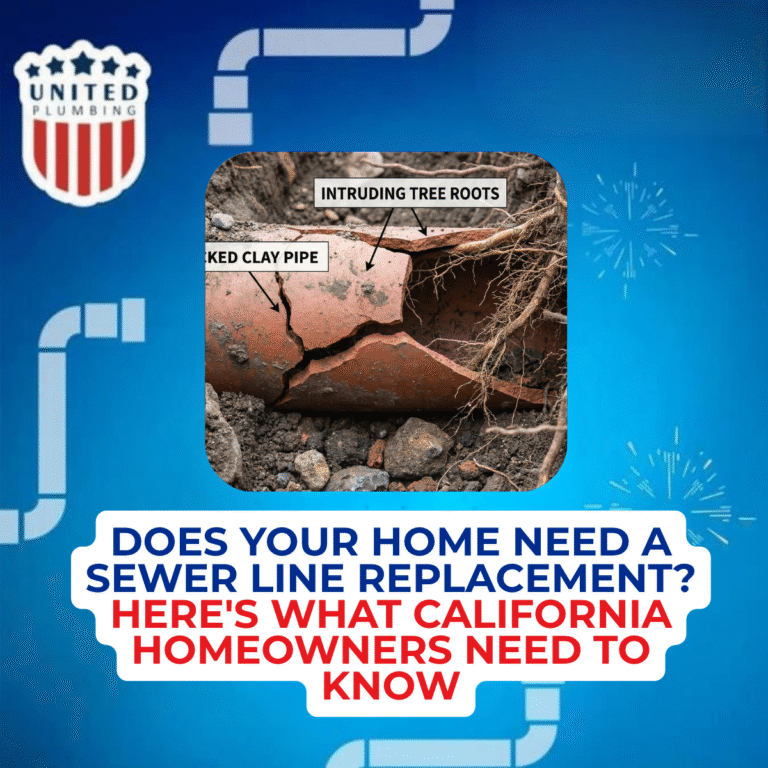
Does Your Home Need a Sewer Line Replacement? Here’s What California Homeowners Need to Know
A failing sewer line is one of the most disruptive and expensive plumbing problems a homeowner can face. In the San...


If you still have questions or need advice, please leave a request and we will contact you as soon as possible
Need a plumber and got no clue where to start?
(408) 539-6936Facing a plumbing issue? Get a FREE in-person estimate and quick solutions from our skilled technicians, ensuring your home runs smoothly again!