5 Signs Your Water Heater Needs Replacement
Is your water heater leaking, making noises, or running out of hot water? Learn five replacement warning signs, when repairs make sense, and options in San Jose, CA.

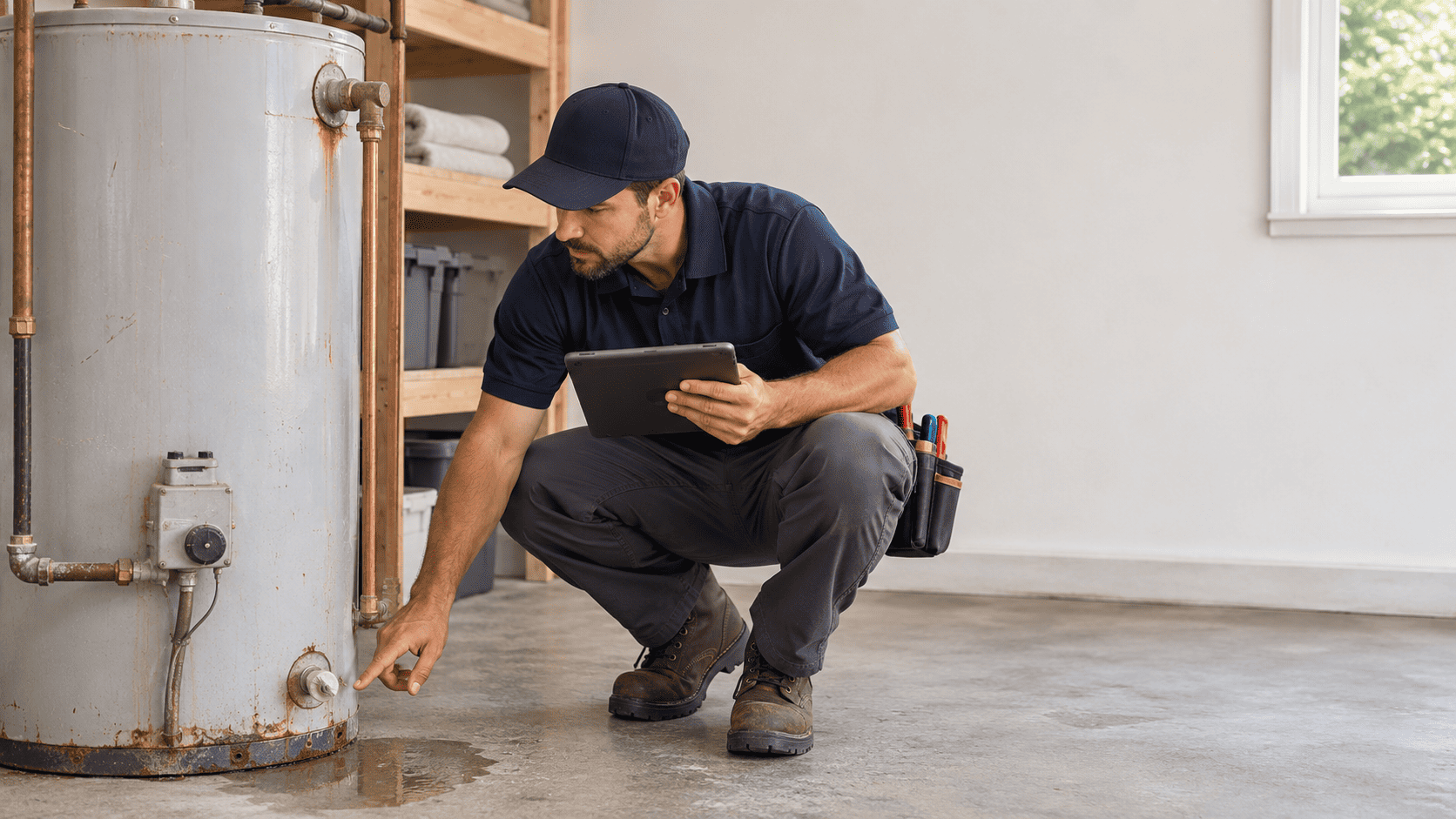
Your water heater doesn't always stop working without warning. A slow leak, rusty hot water, or showers that turn cold sooner than usual can all indicate that something is wrong. But not every problem means you need a new unit.
For homeowners in San Jose, the important question is whether the issue can be repaired safely and affordably or whether the water heater is approaching the end of its useful life. The answer depends on the type of system, its age, maintenance history, and the condition of its components.
Below, we'll cover five warning signs your water heater may need replacement, explain which problems can often be repaired, and help you understand when it's worth considering a new system.
How Do You Know When Your Water Heater Needs Replacing? Five warning signs are leaks around the tank, rusty hot water, an insufficient hot water supply, unusual rumbling or popping noises, and recurring problems with an aging unit. These symptoms deserve attention, but they don’t always mean replacement is necessary.
A leaking tank or extensive corrosion often points toward replacement. Other problems, such as a faulty thermostat, heating element, or valve, may be repairable. A professional inspection can help determine the right solution.
5 Warning Signs Your Water Heater Needs Replacement
Water heater problems often develop gradually. Recognizing these warning signs can help you address a failing system before it leaves your home without hot water or causes water damage.
-
01
Water Leaking Around the Tank
Moisture or puddles near your water heater should never be ignored. A leak may come from a loose connection, a valve, or the tank itself. While some external leaks can be repaired, a corroded or leaking storage tank generally needs replacement. Have the source identified promptly to prevent further water damage.
-
02
Rusty or Discolored Hot Water
Brown, reddish, or rusty-looking hot water can indicate corrosion inside the water heater. However, discoloration may also come from plumbing pipes or other components. If the problem affects only hot water, the heater deserves closer inspection. Extensive internal tank corrosion may make replacement necessary.
-
03
Running Out of Hot Water Too Quickly
If your showers are getting shorter or the water becomes lukewarm unexpectedly, the heater may no longer be delivering enough hot water. Sediment buildup, heating element problems, or increased household demand can all contribute. Some causes are repairable, while persistent performance issues in an older unit may justify replacement.
-
04
Unusual Rumbling or Popping Noises
Rumbling, popping, or crackling sounds may develop when sediment accumulates at the bottom of a storage water heater. These noises do not automatically mean the unit has failed. Depending on its condition, maintenance or repair may help. Persistent noise combined with corrosion or poor performance deserves professional evaluation.
-
05
Frequent Repairs on an Aging Water Heater
An older water heater that repeatedly needs repairs may be approaching the point where replacement makes more financial sense. Many homeowners begin planning for replacement when a storage water heater is around 10 years old. However, age alone is not proof of failure. Maintenance history, tank condition, and repair costs should guide the decision.
Should You Repair or Replace Your Water Heater?
Not every water heater problem calls for replacement. The right decision depends on the unit's age, the condition of its tank, the cause of the problem, and the cost of restoring reliable hot water.
Repair May Be Enough
If the tank is in good condition and the problem involves a replaceable component, repairing the unit may be the more practical option.
- Faulty thermostat or heating element
- Repairable valve or plumbing connection leak
- Minor component failure in an otherwise reliable unit
- Reasonable repair cost compared with replacement
Consider Replacement
Replacement becomes more attractive when the tank itself is deteriorating or repairs are becoming frequent and expensive.
- Corroded or leaking storage tank
- Repeated breakdowns and service visits
- Major repairs on an aging water heater
- Persistent performance or capacity problems
Still unsure? A professional inspection can identify the problem and help you compare repair costs with replacement. United HVAC, Plumbing & Electrical offers water heater repair and replacement in San Jose for gas, electric, and other residential water heater systems.
How Long Does a Water Heater Usually Last?
The average lifespan of a water heater depends on its design, water quality, maintenance history, and operating conditions. While age can help homeowners plan for replacement, it doesn’t tell the whole story.
Traditional Tank Water Heaters: 10–15 Years
Conventional gas and electric storage water heaters typically last around 10–15 years. Sediment buildup, corrosion, and worn components can shorten their service life.
If your tank water heater is approaching 10 years old, it’s a good time to check its condition and start planning for a possible replacement, especially if you’re already experiencing leaks, inconsistent temperatures, or frequent repairs.
Tankless Water Heaters: 20 Years or More
Tankless water heaters can last 20 years or longer with appropriate maintenance and operating conditions. Because they heat water on demand rather than storing it in a large tank, their design differs significantly from conventional storage heaters.
However, mineral buildup and neglected maintenance can affect performance and longevity. Regular servicing is particularly important in areas with hard water.
Heat Pump Water Heaters: Similar to Electric Storage Models
Heat pump water heaters generally have service lives comparable to conventional electric storage water heaters. Their actual lifespan varies by model, installation conditions, and maintenance.
These systems combine a storage tank with heat pump technology, making them an energy-efficient replacement option for many households.
Does an Older Water Heater Always Need Replacement?
No. A properly maintained water heater may continue working beyond its expected lifespan. On the other hand, a newer unit with a damaged tank or serious corrosion may need replacement much sooner.
The best approach is to consider the water heater’s age alongside its actual condition, performance, and repair history.
Not Sure If Your Water Heater Needs Replacing?
Rusty hot water, unexpected leaks, or frequent breakdowns? United HVAC, Plumbing & Electrical helps San Jose homeowners identify water heater problems and decide whether repair or replacement makes more sense.
Get a professional assessment before investing in a new system.

What Type of Water Heater Should You Choose?
Replacing an aging water heater is an opportunity to choose a system that better matches your household’s hot water needs. The right option depends on your daily water usage, available space, energy source, installation requirements, and budget.
Traditional Storage Tank Water Heaters
Conventional gas and electric tank water heaters store heated water for use throughout the day. They’re a familiar choice for many San Jose homes and may be relatively straightforward to replace when the existing connections and installation conditions are suitable.
However, the tank has a limited hot water capacity, and older storage models may use more energy than newer high-efficiency alternatives. Local installation requirements also affect which replacement models are permitted.
Tankless Water Heaters
Tankless systems heat water on demand rather than storing it in a large tank. They can provide continuous hot water during extended use, provided the system is properly sized for the household’s flow rate.
A tankless water heater may be a good fit when space is limited or homeowners want to avoid maintaining a large storage tank. However, converting from a conventional system may require changes to gas piping, venting, or electrical connections.
Heat Pump (Hybrid) Water Heaters
Heat pump water heaters use electricity to transfer heat from the surrounding air into the water. ENERGY STAR-certified models can use substantially less electricity than conventional electric resistance water heaters.
Hybrid systems are worth considering for homeowners interested in energy efficiency and lower long-term operating costs. They do require suitable installation space, adequate electrical capacity, and a condensate drain. Initial installation costs may also be higher.
What About Water Heater Replacement Rules in San Jose?
On November 4, 2026, the Bay Area Air District adopted amendments to Rule 9-6, moving the zero-NOx compliance date for many residential water heater replacements to January 1, 2028.
The requirement applies when covered equipment is replaced, not to water heaters that are still working. The updated rules also provide exemptions and different timelines for certain households, properties, and equipment categories.
Before choosing a new gas or electric water heater, homeowners should confirm which requirements apply to their property and the equipment being installed.
Which Option Is Best for Your Home?
There is no single best water heater for every household. A professional assessment can help compare storage capacity, tankless flow rates, available utilities, installation costs, and long-term energy use.
United HVAC, Plumbing & Electrical helps San Jose homeowners evaluate replacement options and select a water heating system suited to their home.
What to Check Before Replacing a Water Heater in San Jose
Before replacing a water heater, it’s important to look beyond the price of the new unit. Installation requirements, available utilities, and the condition of existing connections can all affect the total cost and scope of work.
1. Check Your Household’s Hot Water Needs
A replacement should be sized for your household’s actual water usage. Consider the number of bathrooms, how often multiple fixtures run simultaneously, and whether your current water heater provides enough hot water.
Choosing a larger unit isn’t always necessary. Proper sizing helps balance comfort, efficiency, and installation costs.
2. Evaluate the Existing Installation
A plumber should assess the available space, water connections, gas or electrical supply, and ventilation requirements before recommending a replacement.
Switching from a conventional tank to a tankless or heat pump water heater may require additional plumbing, electrical, or ventilation work.
3. Confirm Permits and Safety Requirements
The City of San José requires a plumbing permit for water heater installation or replacement. An electrical permit may also be necessary depending on the equipment and installation.
Local requirements also address seismic bracing, temperature and pressure relief valves, and other safety measures. The exact installation requirements depend on the type and location of the water heater.
4. Review What’s Included in the Installation Estimate
Before approving a replacement, ask whether the estimate includes removal of the old unit, necessary connection upgrades, applicable permits, safety improvements, and required inspections.
A detailed estimate makes it easier to compare replacement options and avoid unexpected expenses.
Planning a Water Heater Replacement?
United HVAC, Plumbing & Electrical helps homeowners in San Jose evaluate water heater problems and choose an appropriate repair or replacement solution based on the condition of their existing system.
Frequently Asked Questions
Can a 10-Year-Old Water Heater Still Be Repaired?
Yes. A 10-year-old water heater doesn't automatically need replacement. If the tank is in good condition and the problem involves a replaceable component, repair may still be worthwhile. However, frequent breakdowns, corrosion, or expensive repairs can make replacement a better long-term choice.
Does Rusty Hot Water Mean I Need a New Water Heater?
Not always. Rust-colored hot water may indicate corrosion inside the water heater, but it can also come from plumbing pipes or other components. If only your hot water is discolored, the water heater should be inspected. Significant internal tank corrosion may require replacement.
Can a Leaking Water Heater Be Repaired?
It depends on where the leak originates. A leaking valve, fitting, or connection may be repairable. If water is leaking through a corroded storage tank, replacing the water heater is generally necessary. A plumber can identify the source before recommending repairs.
Is a Tankless Water Heater Better Than a Traditional Tank?
Tankless water heaters can provide continuous hot water when correctly sized and may offer energy-saving benefits. However, they are not automatically the best option for every home. Installation requirements, simultaneous hot water demand, energy source, and upfront costs should all be considered.
Are Heat Pump Water Heaters Worth Considering?
Yes. Heat pump water heaters can be an energy-efficient replacement option, particularly for homeowners looking to reduce electricity consumption compared with conventional electric resistance models. However, available space, electrical capacity, installation conditions, and initial costs need to be evaluated.
Do I Need a Permit to Replace a Water Heater in San Jose?
Water heater replacement in San Jose generally requires a plumbing permit. Depending on the equipment and installation work, additional electrical permits or inspections may be necessary. Check the applicable requirements with the City of San José and your installation professional before starting the project.
Get In Touch
Schedule a Service
Tell us a little about what your home needs.
Trusted HVAC, Plumbing & Electrical Experts
Ready to work with a team that truly cares about your home? Contact us today!
