
- Plumbing Tips & Guides for Bay Area Homeowners
Sewer Line Belly: Causes, Signs & Repair Options in San Jose
Your drains are slow. You've snaked them twice. A plumber cleared the line six months ago and here you are again, same problem, same smell, same backup. If that cycle sounds familiar, you may not have a clog. You may have a sewer line belly, and no amount of snaking is going to fix it.
A sewer line belly is one of the most misdiagnosed plumbing problems in San Jose homes partly because it hides underground, and partly because it mimics a regular blockage right up until it doesn't. By the time most homeowners figure out what's actually going on, they've already paid for two or three drain cleanings that only bought them a few months of relief.
This guide explains exactly what a sewer belly is, why it happens so often in Bay Area homes specifically, how to recognize it, and what it realistically costs to fix. If you're already seeing the signs, United HVAC Plumbing & Electrical serves San Jose, Cupertino, Sunnyvale, Santa Clara, and the surrounding area call us at (408) 767-6749 and we'll start with a camera inspection to confirm what's actually going on before recommending any repair.
Quick Answer: What Is a Sewer Line Belly?
A sewer line belly is a sag or low spot in your underground sewer pipe where waste collects instead of flowing out to the city main. It's a structural problem not a clog which means drain cleaning will clear it temporarily but the backup always returns. In San Jose, sewer bellies are especially common in homes built on slab foundations, where soil movement and seismic activity gradually shift pipes out of alignment over time.
What Is a Sewer Line Belly?
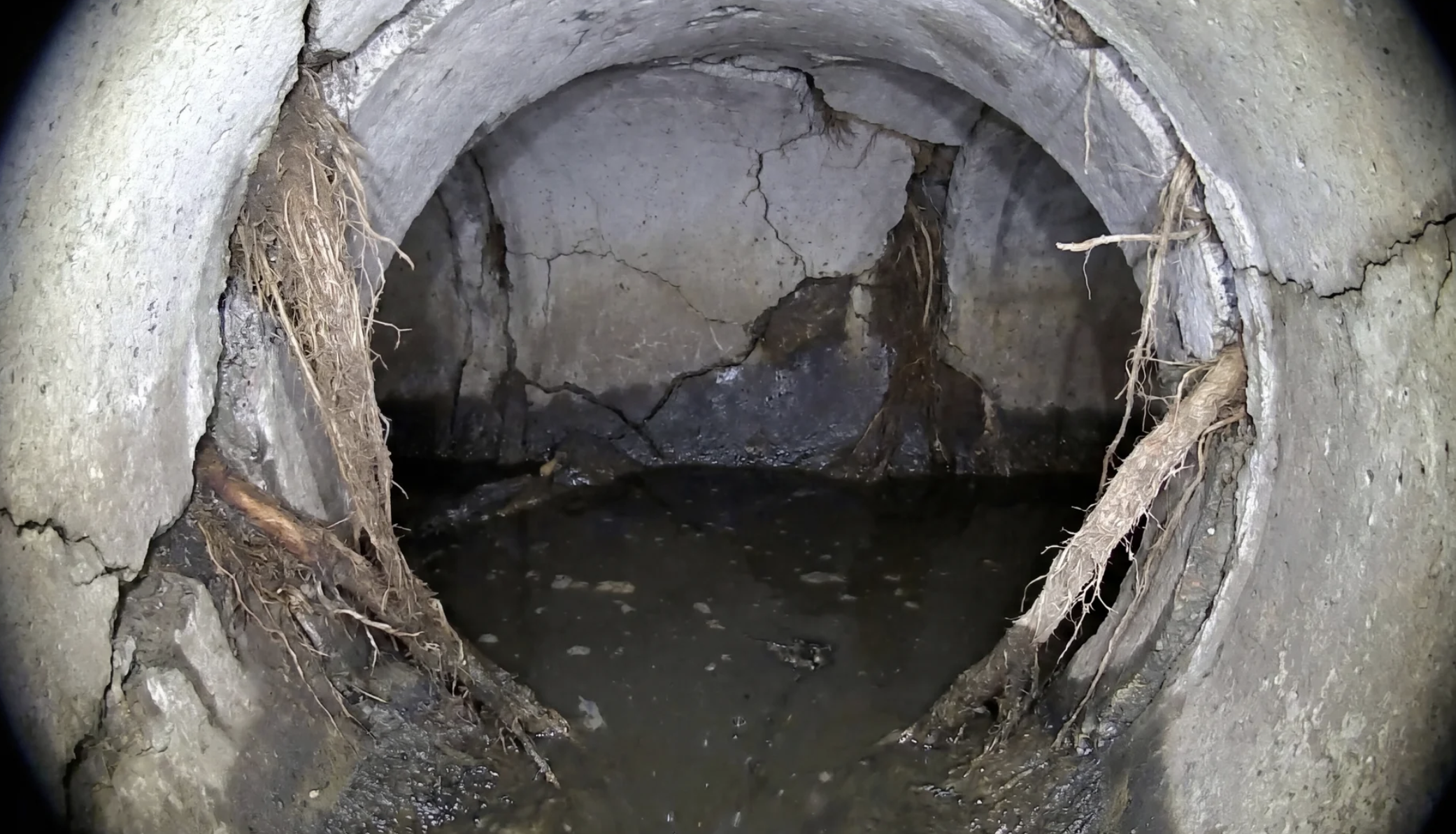
A sewer line belly is a section of your underground sewer pipe that has sagged downward, creating a low spot where wastewater pools instead of flowing out. Your sewer pipe is supposed to run at a continuous downward slope roughly a quarter inch drop per foot so gravity moves waste from your house to the city main without interruption. When a section of that pipe loses its slope and dips, you've got a belly.
Think of it like a garden hose with a kink in the middle. Water backs up behind the low point, waste accumulates, and over time that pooled material hardens into a stubborn blockage. The difference between a belly and a standard clog is critical: a clog is a blockage you can clear. A belly is a shape problem in the pipe itself. Snake it, hydro-jet it, clear it completely the pipe still sags, waste still pools, and the backup comes back. That's the cycle most homeowners are stuck in before they find out what's really going on.
Left alone long enough, the pooled waste inside a belly starts to corrode the pipe from the inside out. What starts as a slow drain eventually becomes a full backup, then a collapsed line.
Need HVAC Service?
Our expert plumbers are ready to help with installation, repair, or replacement. Contact us today!

What Causes a Sewer Line Belly in Bay Area Homes?
A sewer belly forms when the soil supporting your underground pipe shifts, settles, or erodes enough that a section of pipe loses its downward slope. In most parts of the country this happens gradually over decades. In the Bay Area, it tends to happen faster and more often because of a combination of factors that are specific to this region.
Seismic activity and soil movement. The Bay Area sits on some of the most seismically active land in the country. Even minor tremors that homeowners barely notice can shift the soil around underground pipes enough to knock them out of alignment over time. This is the single biggest reason sewer bellies are more common here than in most other parts of California.
Slab foundations. A large portion of San Jose and Cupertino homes particularly those built between the 1950s and 1980s were constructed on concrete slab foundations with sewer pipes running directly underneath. There's no crawl space to buffer movement. When the slab shifts, the pipe shifts with it, and bellies form at the stress points.
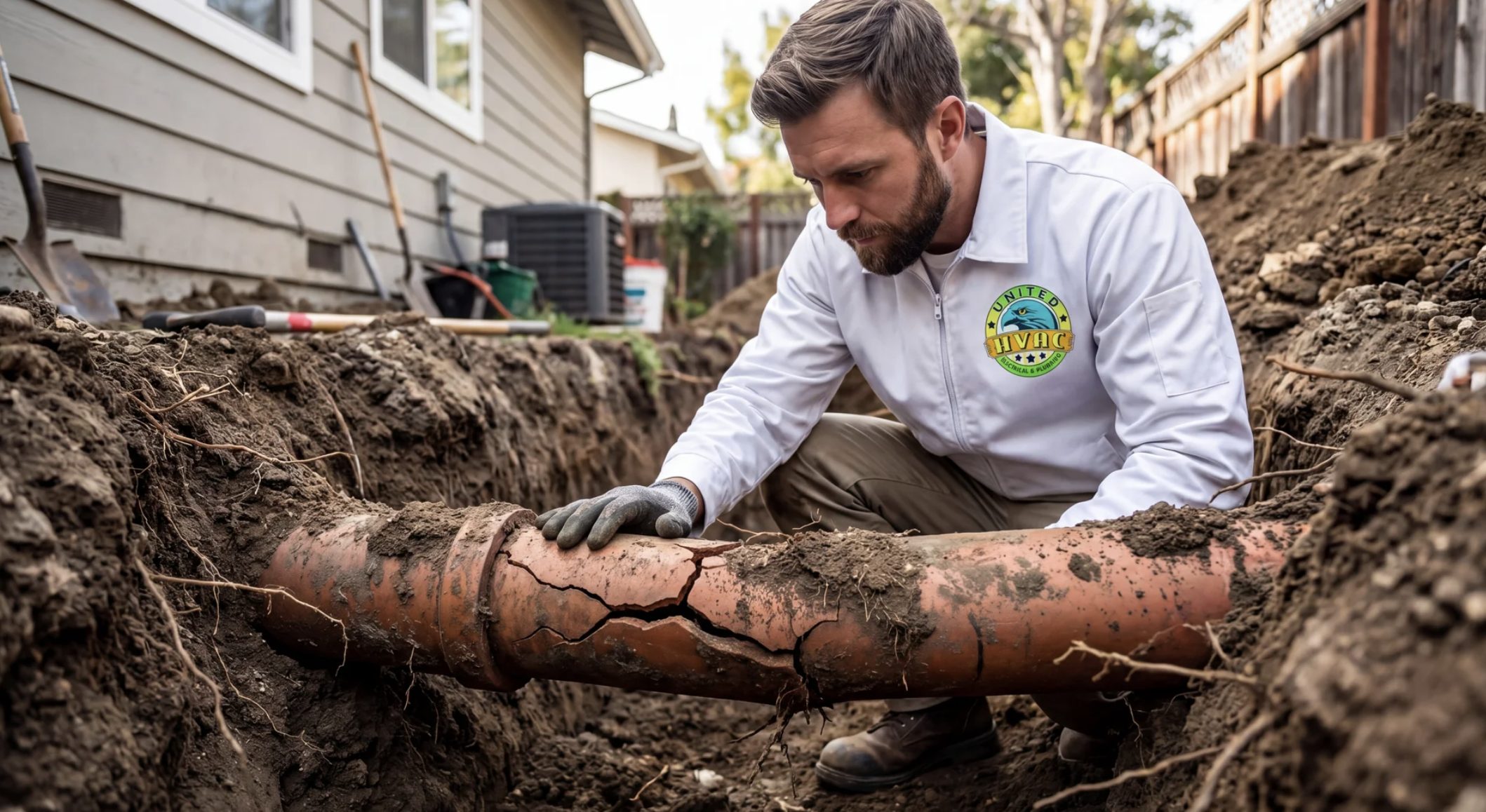
Aging clay pipes. Homes built before 1980 across San Jose, Santa Clara, and Sunnyvale frequently still have their original clay sewer lines. Clay pipe is rigid and brittle it holds its shape well when new, but decades of soil pressure, root intrusion, and ground movement cause sections to crack, separate at the joints, and sag.
Tree root pressure. Valley Oaks, liquid ambers, and fig trees are common throughout older Bay Area neighborhoods, and their root systems are aggressive. Roots don't just invade pipes through cracks they push against the pipe's exterior, gradually displacing the soil support underneath and contributing to belly formation.
Poor original installation. Sometimes the belly has nothing to do with what happened after the house was built. Pipes installed without adequate bedding material, or without maintaining the correct slope throughout, can develop bellies within years of construction.
Bay Area rainy season. Prolonged heavy rainfall saturates the soil, reduces its load-bearing capacity, and accelerates settling around pipes especially in areas with clay-heavy soil, which is common across much of Santa Clara County.
What Are the Signs of a Sewer Line Belly?
The most reliable sign of a sewer belly is a drain problem that keeps coming back after being cleared. If a plumber snaked your line, it flowed fine for a few months, and now you're dealing with the same slow drains or backup again that pattern is the belly telling on itself.
Here's what to watch for:
Slow drains throughout the house. Not just one sink or one shower multiple fixtures draining slowly at the same time points to a problem in the main sewer line, not a localized clog. A belly affects everything downstream of it.
Recurring backups after cleaning. This is the signature symptom. Snaking and hydro-jetting clear the pooled waste temporarily, but the sag is still there. Within weeks or months, waste pools again and the backup returns.
Gurgling sounds from toilets and drains. When air gets trapped behind a low spot in the line, it forces its way back up through the nearest fixture. That gurgling sound especially when you flush a toilet or run the washing machine is a pressure symptom worth taking seriously.
Sewage odor in the yard or near floor drains. Waste sitting stagnant in a belly produces hydrogen sulfide gas. If you're noticing a sewer smell outside near the sewer line path, or from floor drains inside, a belly is one of the first things to rule out.
Unusually green or soggy patches of grass. If a belly has progressed to the point where the pipe is cracked or leaking at the low spot, the saturated sewage acts as fertilizer. A strip of lush, green grass over your sewer line in an otherwise dry yard is a flag especially after a dry stretch when the rest of the lawn is brown.
How Do You Diagnose a Sewer Line Belly?
The only way to confirm a sewer belly is a camera inspection. There is no other method not snaking, not water testing, not guessing based on symptoms alone. A belly is a shape problem inside an underground pipe, and the only way to see it is to put a camera in the line.
During a sewer camera inspection, a licensed technician feeds a waterproof, high-definition camera into your sewer line through a cleanout access point. As the camera travels through the pipe, it transmits live video to a monitor, showing the interior condition of the line in real time. A belly shows up clearly the camera visibly dips into the low spot, and you can see waste and debris pooled at the bottom of the sag.
A proper inspection also tells the technician exactly where the belly is located, how deep the pipe sits at that point, and what the pipe material is all of which directly determines what repair method makes sense and what it will cost. Without that information, any quote you get is a guess.
This is why it's worth being skeptical if a plumber recommends a sewer repair without first running a camera. At United HVAC Plumbing & Electrical, every sewer evaluation in San Jose and Cupertino starts with a camera inspection because recommending a repair without knowing exactly what you're dealing with wastes your money and ours.
Need HVAC Service?
Our expert plumbers are ready to help with installation, repair, or replacement. Contact us today!
How Much Does It Cost to Fix a Sewer Belly in San Jose?
Sewer belly repair costs vary significantly depending on where the belly is, how severe the sag is, what the pipe is made of, and how the technician needs to access it. There is no single flat rate anyone who quotes you a price without first running a camera is guessing.
That said, here are general ranges to give you a realistic starting point:
Spot repair (minor sag, accessible location): $1,500–$3,500 — If the belly is isolated to a short section of pipe and can be accessed without major excavation, a targeted dig and pipe realignment or section replacement is the least expensive fix.
Trenchless pipe lining (CIPP): $3,000–$6,000 — For bellies where the pipe structure is still intact enough to support a liner, cured-in-place pipe lining creates a new pipe surface inside the old one without major digging. Not every belly qualifies for this method — the sag needs to be gradual rather than severe.
Pipe bursting or full replacement: $5,000–$12,000— For severely sagged, collapsed, or deteriorated pipe, or when the belly runs through a long section of line, full replacement is the most reliable long-term fix. Trenchless pipe bursting minimizes yard disruption; traditional excavation may be required for pipes running under a concrete slab.
Factors that affect your final cost:
- Depth of the pipe — deeper pipes cost more to access
- Whether the pipe runs under concrete slab, driveway, or landscaping
- Linear feet of affected pipe
- Pipe material (clay vs. cast iron vs. PVC)
- Whether permits are required for the scope of work
All cost ranges above are general estimates. Contact United HVAC Plumbing & Electrical at (408) 767-6749 for an accurate quote based on a camera inspection of your specific line.
Can a Sewer Belly Be Fixed Without Digging Up My Yard?
Sometimes but not always. Whether trenchless repair is an option depends entirely on what the camera inspection shows.
Trenchless pipe lining (CIPP) works well for gradual bellies where the pipe walls are still structurally sound. A resin-saturated liner is inserted into the existing pipe, inflated against the pipe walls, and cured in place creating a smooth, seamless new pipe surface inside the old one. It doesn't fix the sag itself, but it seals the interior, prevents waste from sticking, and stops root intrusion at the damaged section. For the right candidate, it's faster, cleaner, and causes far less disruption to your yard, driveway, and landscaping than an open dig.
Trenchless pipe bursting is used when the pipe is too deteriorated for lining. A bursting head is pulled through the old pipe, fracturing it outward while simultaneously pulling a new HDPE pipe into place behind it. This is a full replacement without a full trench but it does require small access pits at each end of the run.
Traditional excavation is unavoidable in two situations: when the belly sits directly under a concrete slab foundation, or when the pipe has fully collapsed and there's no longer a clear path for trenchless equipment. In those cases, the slab or surface above the pipe needs to be opened to access and replace the damaged section. It's more disruptive and more expensive, but for a badly collapsed line under a slab which is a real scenario in older San Jose and Cupertino homes it's the only option that actually solves the problem.
The honest answer is that you won't know which applies to your situation until a camera inspection confirms the location, depth, and condition of the belly.
What Happens If You Ignore a Sewer Line Belly?
A sewer belly does not stabilize on its own. The pipe is not going to shift back into alignment, and the waste pooling in the low spot is not going to stop accumulating. Every month you wait, the situation gets worse and the repair gets more expensive.
Here's what the progression looks like if a belly goes unaddressed:
Stage 1 — Recurring backups. Slow drains and periodic backups that clear with snaking. Manageable, but you're paying for drain cleaning every few months instead of fixing the actual problem.
Stage 2 — Chronic blockage. The belly fills with hardened grease, waste, and debris to the point where snaking no longer clears it fully. Backups become more frequent and more severe.
Stage 3 — Pipe failure. The constant weight of pooled waste and the corrosive effect of hydrogen sulfide gas weaken the pipe wall at the belly. Clay pipes crack. Cast iron corrodes through. The pipe begins to leak sewage directly into the surrounding soil.
Stage 4 — Sewage backup into the home. Once the pipe fails completely or the blockage becomes total, sewage backs up through the lowest fixtures in your home — floor drains, bathtubs, toilets on the ground floor. This is a health emergency. Raw sewage contains bacteria, viruses, and toxic gases including methane and hydrogen sulfide. Cleanup requires professional remediation, not just a mop.
Foundation and structural damage. In slab foundation homes — which describes a significant portion of the housing stock in San Jose, Cupertino, and Santa Clara a leaking sewer line under the slab saturates the soil and can undermine the foundation over time. What started as a $3,000 repair becomes a $30,000 structural problem.
The window for the least invasive, least expensive fix is early. If you're seeing the signs, the camera inspection is the right first step not another drain cleaning.
Need HVAC Service?
Our expert plumbers are ready to help with installation, repair, or replacement. Contact us today!
Sewer Belly Repairs in San Jose: What Local Homeowners Need to Know
You own the pipe — all of it. Under City of San Jose rules, homeowners are responsible for maintaining the entire sewer lateral from the house to the connection point at the city main. The city maintains the main line in the street, but everything from your foundation to the property line including any belly in that stretch is your responsibility to repair. This is worth knowing before you call the city expecting them to handle it.
Permits may be required. Sewer line repair and replacement in San Jose and Santa Clara County typically requires a permit when the scope of work involves pipe replacement or major excavation. Your contractor should pull the permit if they offer to skip it, that's a red flag.
Older housing stock means higher risk. The neighborhoods that see the most sewer belly issues tend to be those built between the 1950s and 1970s — areas across San Jose, Cupertino, Sunnyvale, and Milpitas where the original clay sewer lines are now 50 to 70 years old. If your home was built before 1980 and has never had a sewer camera inspection, you have no way of knowing what condition your line is actually in. A proactive inspection is far cheaper than an emergency repair.
Bay Area rainy seasons accelerate the problem. Extended wet winters the kind that have become more common across Santa Clara County in recent years saturate the clay-heavy soil throughout the South Bay. Saturated soil loses its load-bearing capacity faster, and pipes in marginal condition can shift significantly in a single wet season. If you noticed your drains getting worse after last winter, that's not a coincidence.
FAQ
Q: What is a sewer belly and how is it different from a clog? A sewer belly is a structural sag in your underground sewer pipe — a low spot where waste pools instead of flowing out. A clog is a blockage you can clear with snaking or hydro-jetting. A belly looks like a clog but keeps coming back because the pipe's shape hasn't changed. The only fix is repairing or relining the sagged section.
Q: How do I know if I have a sewer belly without digging? You can't confirm it without a camera inspection — but the pattern of symptoms points strongly to a belly: slow drains across multiple fixtures, backups that return after clearing, gurgling toilets, and sewage odor in the yard. If your line has been snaked more than once in the past year with no lasting improvement, a camera inspection is the logical next step.
Q: Can a sewer belly fix itself over time? No. A belly is caused by soil movement or settlement that has already happened. The pipe is not going to shift back into its original position on its own. Without repair, the belly will continue to accumulate waste, corrode the pipe wall, and eventually cause a full backup or pipe failure.
Q: How long does it take to repair a sewer belly? A trenchless repair — CIPP lining or pipe bursting — typically takes one to two days depending on the length of the affected section and site conditions. Traditional excavation can take two to four days. Work under a concrete slab takes longer due to the additional access required.
Q: Does homeowners insurance cover a sewer line belly? Standard homeowners insurance policies generally do not cover underground sewer line repair or replacement. Some policies offer an optional service line endorsement that covers damage to underground pipes — check with your insurance agent to see if your policy includes it or if you can add it. Home warranties may cover certain sewer repairs depending on the plan, but coverage caps and exclusions vary widely — read the fine print before assuming you're covered.
Need Plumbing Tips & Guides for Bay Area Homeowners Service?
Our expert plumbers are ready to help with installation, repair, or replacement. Contact us today!