

Bay Area cities are surrounded by mountains built from calcium. Hard water from mountains should be processed by whole house water filtration system. United HVAC, plumbing and electrical installs whole house water filtration systems across the Bay Area — serving San Jose, Cupertino, Saratoga, Belmont, Redwood City, Menlo Park, Belmont and surrounding communities. Our certified plumbers offer upfront pricing and same-day assessments for homeowners ready to stop managing water quality one faucet at a time.
What Is a Whole House Water Filtration System and What Does It Filter?
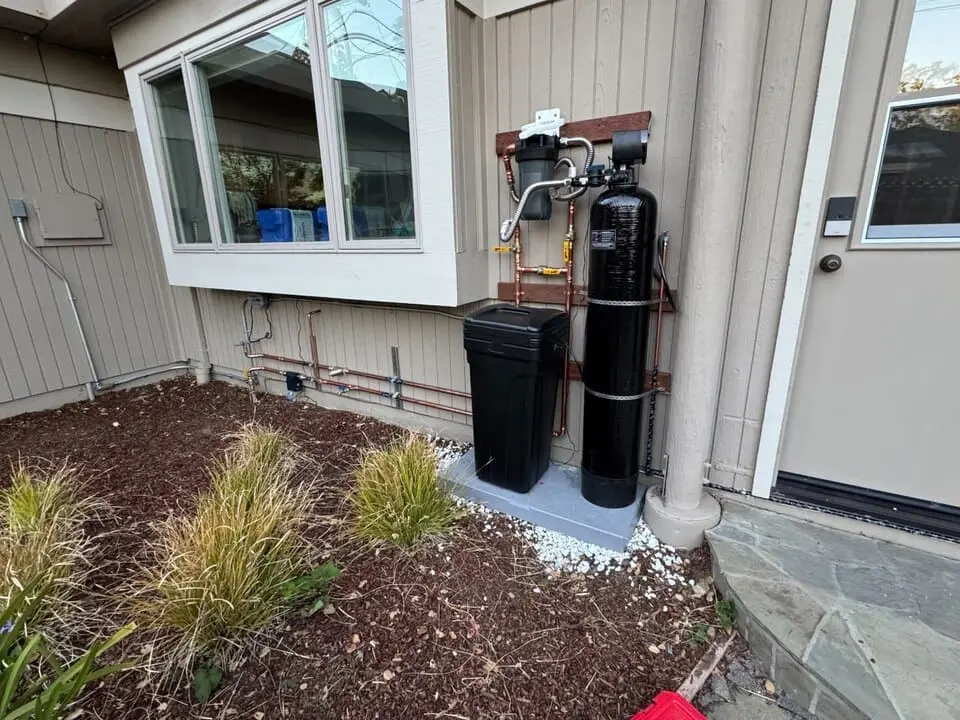
A whole house water filtration system is installed at the main water line entering your home, treating every faucet, shower, appliance, and tap before water reaches any fixture. Unlike point-of-use filters, it addresses water quality at the source — protecting your plumbing, water heater, dishwasher, and skin, not just your drinking glass.
Types of Whole House Filtration Systems
The right system depends on what is actually in your water. Sediment filters are the entry-level option, trapping rust, sand, and silt that enters through aging municipal pipes. They are often the first stage in a larger setup and protect appliances from abrasive wear.
Carbon block filters are the most common upgrade for Bay Area municipal customers. They remove chloramines, volatile organic compounds (VOCs), herbicides, and pesticides — directly addressing that pool-like odor many homeowners notice in the shower.
Whole house water softeners use ion exchange to reduce dissolved calcium and magnesium. They do not filter contaminants in the traditional sense, but they eliminate the scale buildup that damages fixtures and reduces water heater efficiency over time.
Multi-stage systems combine sediment pre-filtration, carbon block treatment, and sometimes UV disinfection. For homeowners in Saratoga or Menlo Park dealing with both hard water and chemical treatment concerns, a combined softener and carbon system is typically the right call. We install different systems like Aquasure Harmony Series — including the 48,000-grain model — as well as other capacity variants and brands depending on household size and water conditions.
What Contaminants Does a Whole House Filter Remove?
A properly specified carbon-based system reduces: chloramines and chlorine, VOCs, sediment and particulates, pesticides and herbicides, hydrogen sulfide, and heavy metals including lead and mercury when paired with appropriate media. Systems rated to NSF/ANSI Standard 42 address taste and odor; those rated to NSF/ANSI Standard 53 address health-related contaminants. United HVAC, Plumbing and Electrical matches the system spec to what is actually present in your local water supply.
Signs You Need a Whole House Water Filtration System Installed
During our plumbing service homeowners can ask for a free water hardiness test. You can easily see what type of water you have. Sometimes homeowners who contact us do so after noticing a persistent, specific problem — scale buildup on fixtures, a chlorine smell in the shower, or a water heater failing ahead of schedule. These symptoms point directly to water quality issues a whole house filtration system is designed to resolve.
Hard Water, Sediment, and Chlorine: Bay Area-Specific Water Issues
Water delivered through SFPUC and East Bay MUD systems is treated with chloramines rather than chlorine — an effective disinfectant that produces noticeable taste and odor and can be harder on rubber seals in plumbing fixtures. Hardness levels across the region typically run between 100 and 180 mg/L — high enough to leave visible mineral deposits on fixtures and reduce water heater efficiency by 15 to 25 percent over a few years.
In cities like Redwood City and Belmont, water sourced through the San Francisco Regional Water System tends to be moderately hard, while areas drawing from local groundwater — including parts of Cupertino and San Jose — can see higher mineral content. Older neighborhoods also see elevated sediment loads from aging infrastructure, which a whole house sediment pre-filter catches before it reaches appliances.
Watch for these recognizable signs:
- White or gray scale on showerheads, faucet aerators, and dishwasher heating elements — a direct indicator of hard water mineral deposit.
- Chlorine or chemical smell when running a hot shower — chloramine volatilizes in steam more readily than cold water.
- Skin dryness or irritation after bathing, particularly in households with eczema-prone skin.
- Rust-colored or blue-green staining on fixtures or laundry from iron or copper pipe corrosion.
- Frequent appliance repairs — water heaters, washing machines, and ice makers failing ahead of their rated service life.
- Flat or off-tasting drinking water that persists even from a refrigerator filter.
When an Under-Sink Filter Is No Longer Enough
An under-sink reverse osmosis unit purifies water at one tap — typically the kitchen. It does nothing for the water running through your water heater, washing your clothes, or contacting your skin in the shower. If scale is building up on fixtures throughout the house, a point-of-use filter is not addressing the underlying problem. Whole house filtration installation solves it system-wide, protecting plumbing infrastructure and every fixture simultaneously.
Whole House Water Filtration System Installation: How the Process Works
Installing a whole house water filtration system takes one to four hours for most single-family homes, depending on system complexity and access to the main water line. The process begins before arrival — with a water quality assessment that determines which system is right for your specific conditions.
Pre-Installation Water Quality Assessment
Before recommending a system, United HVAC, Plumbing and Electrical conducts a water quality assessment using on-site test strips and your local utility’s most recent Consumer Confidence Report. For well-water properties, a certified lab test covering bacteria, nitrates, hardness, iron, and pH is recommended. This step ensures the right system is specified for your water. The assessment takes 20 to 30 minutes and determines system type, filter sizing, and any pre-treatment requirements.
We also evaluate incoming water pressure and pipe diameter at the main shutoff. For homes in Cupertino or San Jose where municipal pressure can run higher than average, verifying the pressure rating of the filter housing before installation prevents premature failure.
Where the System Is Installed and What to Expect on the Day
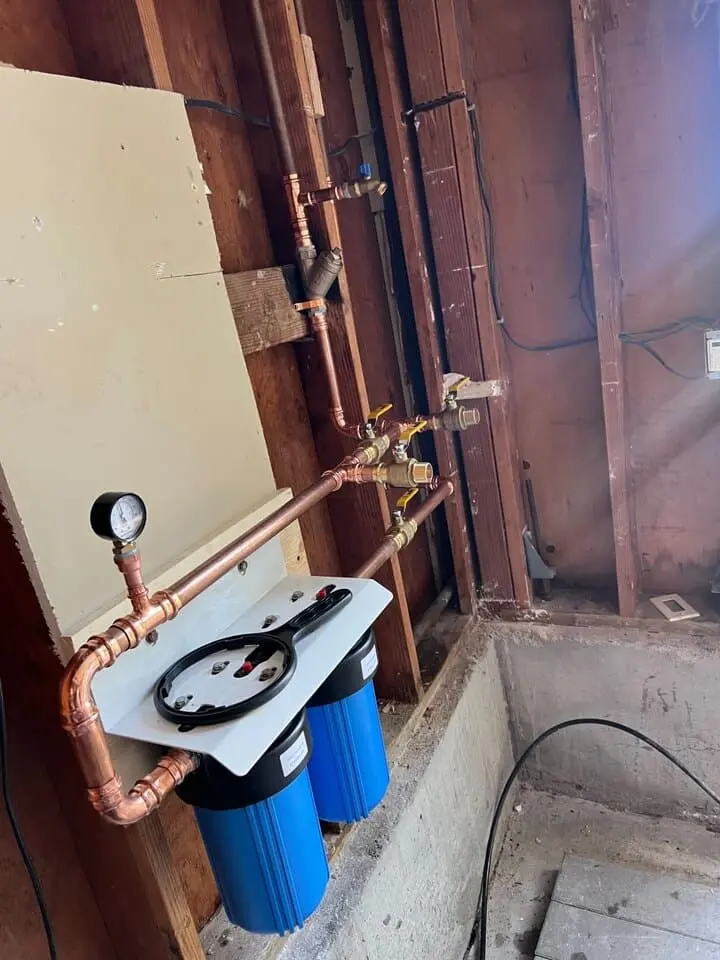
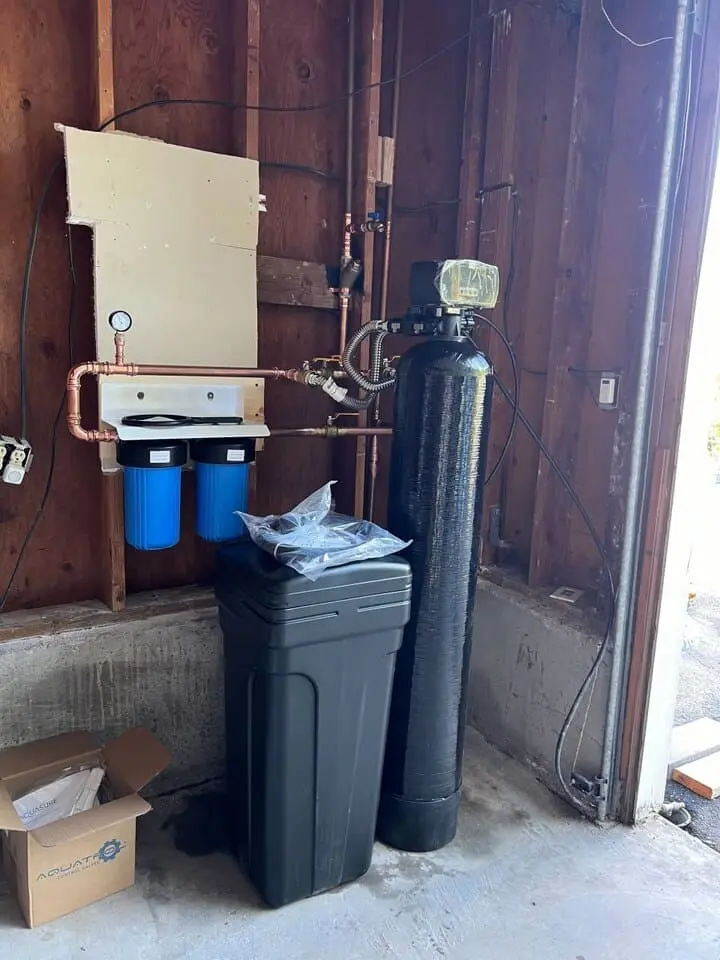
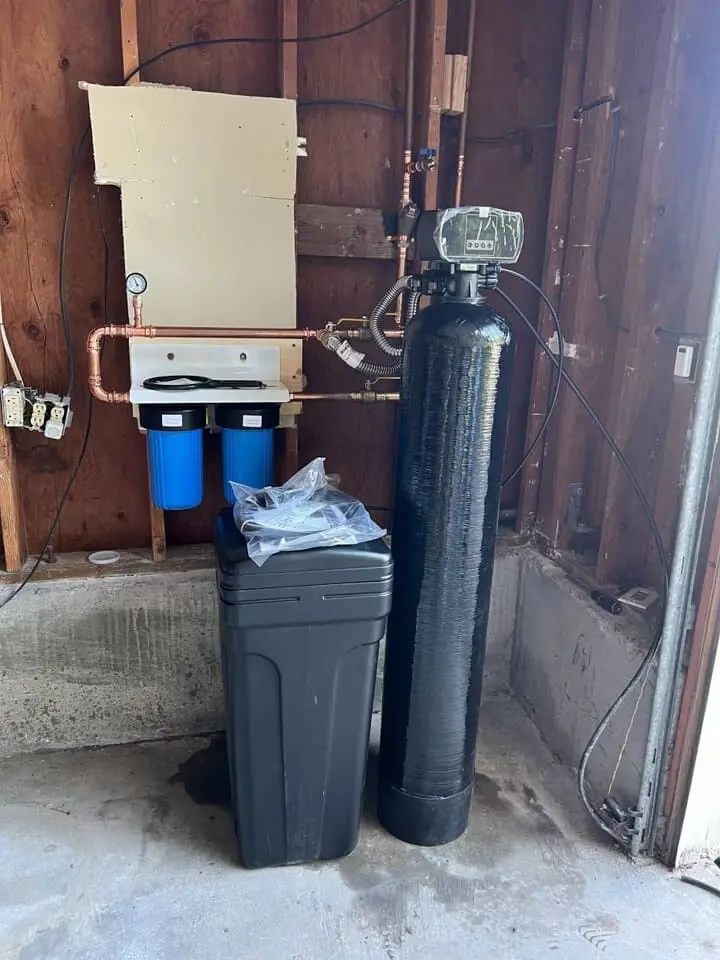
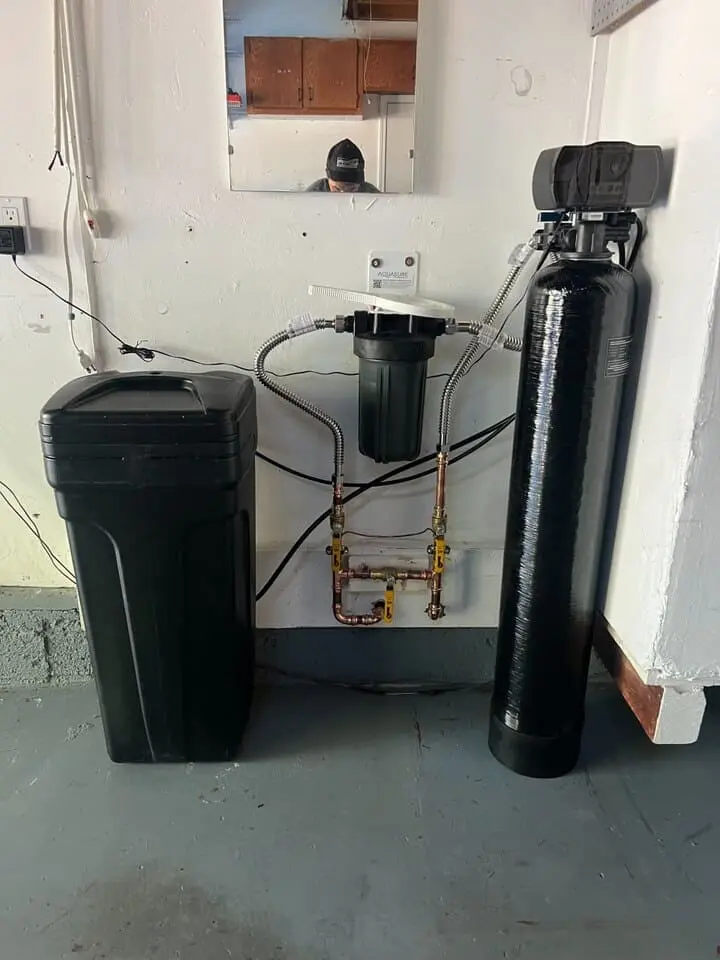
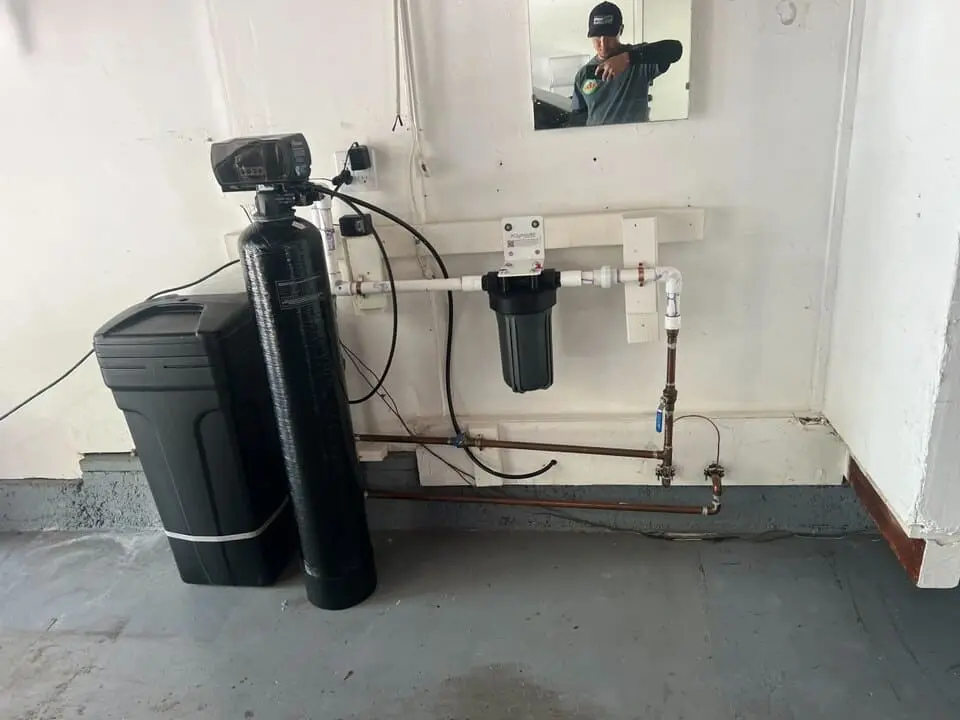
Whole house filtration systems are installed on the main cold water supply line, immediately after the main shutoff valve and before the line branches to the water heater and household plumbing — typically in the garage, utility room, or crawl space. We install the filter housing, bypass valve, pressure gauge, and any pre- or post-filter stages, then flush and test the system before leaving.
For softener installations — including the Aquasure Harmony 48,000-grain and comparable models — we also connect the brine tank, program regeneration cycles to match your household water usage, and confirm proper drain line routing. Water service is shut off for approximately 30 to 60 minutes during installation. Most installs are complete within two to three hours; combined filtration and softener setups may take half a day.
Whole House Water Filtration System Installation Cost in the Bay Area
Whole house water filtration system installation in the Bay Area typically costs between $3,000 and $8,000 depending on system type, home size, and site conditions. The range reflects real differences in complexity — a single sediment filter is a very different job from a multi-stage carbon and softener combination.
Factors That Affect the Final Price
System Type | Estimated Cost (Equipment + Labor) | Best For |
Single sediment filter | $600 – $900 | Particulate / rust removal; well water pre-filtration |
Carbon block system | $900 – $1,800 | Chloramine, VOC, and odor removal on municipal supply |
Water softener (e.g. Aquasure Harmony 48K) | $2,000 – $3,500 | Hard water scale prevention; appliance protection |
Multi-stage carbon + softener combo | $3,500 – $8,000 | Comprehensive treatment for hardness and chemical contaminants |
Labor typically depends on site accessibility and whether pipe bypasses are needed. Permit requirements vary by municipality — cities like San Jose require a plumbing permit for connections to the main supply line, while others have exemptions for certain system types. United HVAC, Plumbing and Electrical has a dedicated permit department that handles permit applications where required and includes that cost in the upfront estimate.
Long-Term Savings and Appliance Protection
A whole house filtration system typically pays for itself within three to five years. A water heater operating with softened, filtered water loses significantly less efficiency to scale buildup and typically lasts several years longer than one exposed to untreated hard water. Families that currently buy bottled water regularly can save $600 to $1,200 per year. Reduced detergent use and fewer appliance repair calls add to the long-term return.
Why Bay Area Homeowners Choose United HVAC, Plumbing and Electrical for Whole House Water Filtration Installation
United HVAC, Plumbing and Electrical has been installing water filtration and treatment systems in the Bay Area since 2019. Our technicians are familiar with the specific water quality conditions across Bay Area municipalities and size and specify systems accordingly — whether that means a carbon block system for a Belmont home on municipal supply or a combined softener and filtration setup for a property in Saratoga with documented hard water.
Licensed, Insured, and Local
Every United HVAC, Plumbing and Electrical technician is trained and carries full general liability and workers’ compensation insurance. Whole house filtration installation connects to your home’s main water supply — a job that requires permits in many jurisdictions and carries liability if done incorrectly. We pull the permits, do the work, and carry the coverage.
25+ Years Improving Bay Area Water Quality
Since 2019, United HVAC, Plumbing and Electrical has installed filtration and softening systems across Silicon Valley and the Peninsula — from aging ranch-style homes in San Jose’s Willow Glen neighborhood to newer construction in Cupertino and Menlo Park. That experience means we have encountered the full range of pipe configurations, water conditions, and site constraints found across the region. When a job does not go according to plan, we adapt without delays.
Custom System Selection Based on Your Local Water Conditions
We do not operate on a catalog model — recommending the same system to every homeowner regardless of what their water actually contains. We assess your water quality before making a recommendation, cross-reference it with your utility’s published data, and specify the right equipment for your situation. That might be an Aquasure Harmony 48,000-grain softener for a large household in Redwood City, a carbon block system for a Menlo Park condo on municipal supply, or a multi-stage setup for a Saratoga property with a private well. Matching the system to the water is what custom selection means in practice.
Ready to install a whole house water filtration system in your Bay Area home? Call United HVAC, Plumbing and Electrical at (408)539-6936 — same-day assessments available in San Jose, Cupertino, Belmont, Redwood City, Menlo Park, Saratoga, Milpitas and surrounding areas.
Tankless Water Heater Installation & Repair
Tankless water heater installation and repair for endless hot water and energy savings.

Gas Tank Water Heater Installation & Repair
Gas tank water heater installation, repair, and replacement services.
Hybrid Water Heater Installation
Energy-efficient hybrid water heater installation combining heat pump and electric technology.
Whole House Filtration Installation
Complete whole-house water filtration system installation for clean, safe water.